
Asphalt Paving · Fort Worth, TX
Asphalt Paving in Haltom City, TX: Driveways, Lot Repair & Sealcoating
Haltom City is home base — our address sits on Huddleston St inside the 76137 ZIP, so every Haltom City call is the shortest drive on our route, not a special trip to the edge of the metro. At Asphalt & Paving North Fort Worth, the paving crews we coordinate with work Haltom City's driveways, parking lots and access roads constantly, fully licensed and insured inside city limits or the unincorporated Tarrant County pockets nearby. The city incorporated in 1949 and grew from 42,409 residents in 2010 to 46,073 by 2020, packed into just 12.38 square miles bounded by NE Loop 820, US-377 (Denton Highway), SH-121 and SH-183 (Belknap Street) — a dense, mature suburb aging on a predictable schedule.
That schedule runs harder here than almost anywhere on our route, because Haltom City sits squarely on the expansive 'black gumbo' clay that dominates North Central Texas — high-plasticity clay weathered from the Cretaceous Eagle Ford and Woodbine formations, with clay content in Tarrant County frequently exceeding 50%. This soil swells hard when it's wet and shrinks just as hard through the long, dry Texas summer, moving several inches seasonally under everything paved on top of it. Add intense summer UV that oxidizes and embrittles asphalt binder, plus occasional winter freeze-thaw cycles prying cracks wider, and a Haltom City driveway or lot stays under near-constant stress.
Most of Haltom City's residential core dates to the postwar 1950s-70s subdivision boom that followed incorporation, so much of the city's original asphalt and concrete driveways are decades past a normal service life and cracking on that same shifting clay. Belknap Street and Beach Street add a second category: aging retail and light-industrial parking lots carrying heavy daily traffic. Whether it's a cracked driveway near our own shop or a rutted lot on Beach Street, call (817) 207-5968 — Open 24 Hours, and dispatch already knows this city block by block.
Local Service
Paving for Haltom City's Postwar Driveways on Shifting Clay
Haltom City's 1950s-70s residential core sits directly on the region's most reactive clay, so driveway cracking and heaving shows up here earlier and more consistently than in newer subdivisions.
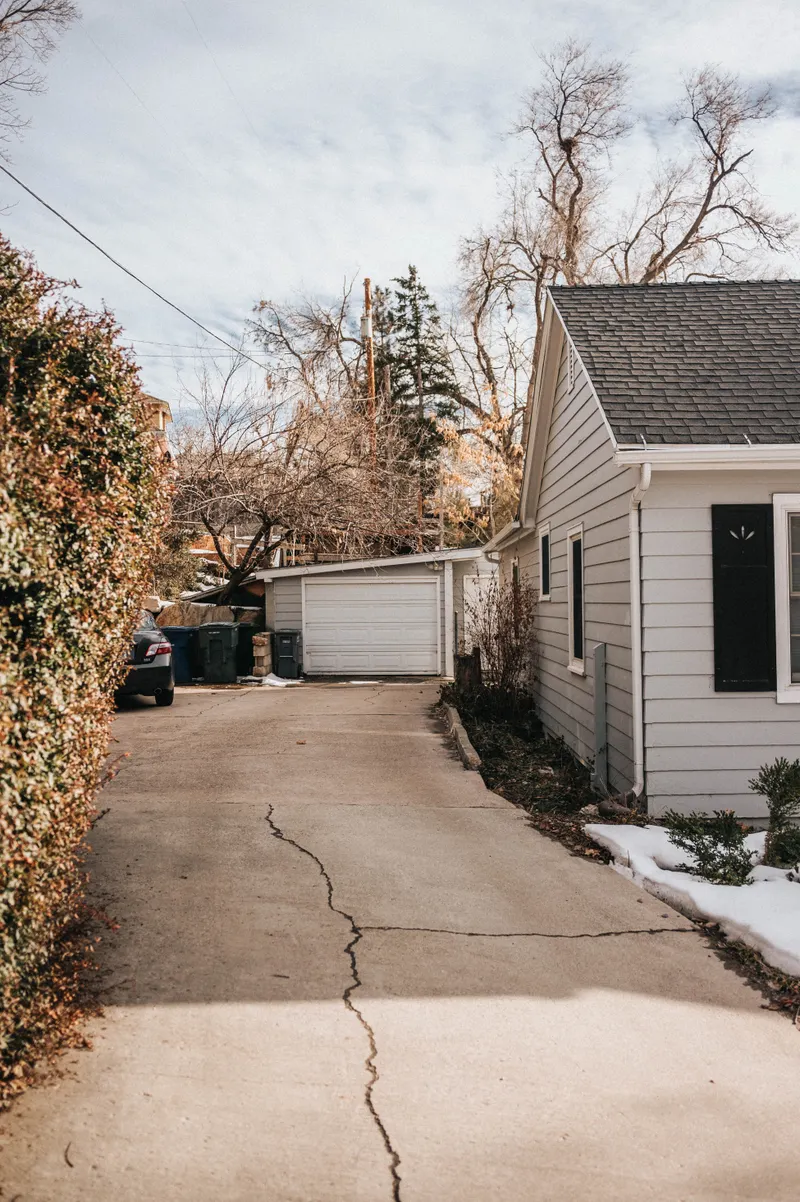
Driveway Replacement for Haltom City's 1950s-70s Housing Stock
Haltom City incorporated in 1949 and grew fastest through the postwar decades that followed, so much of the city's residential core is 1950s-70s subdivisions on modest lots — and the original driveways poured for those homes are now well past a typical service life. Working out of our own Huddleston St address, we see this constantly: alligator cracking starting at a driveway's edge, base failure where the original subgrade was never compacted to today's standard, and slabs that have simply outlived their material.
The fix isn't always full replacement. We evaluate whether an overlay solves an aging Haltom City driveway before recommending a full tear-out, and we'll tell you honestly which one gets you another decade rather than another patch.
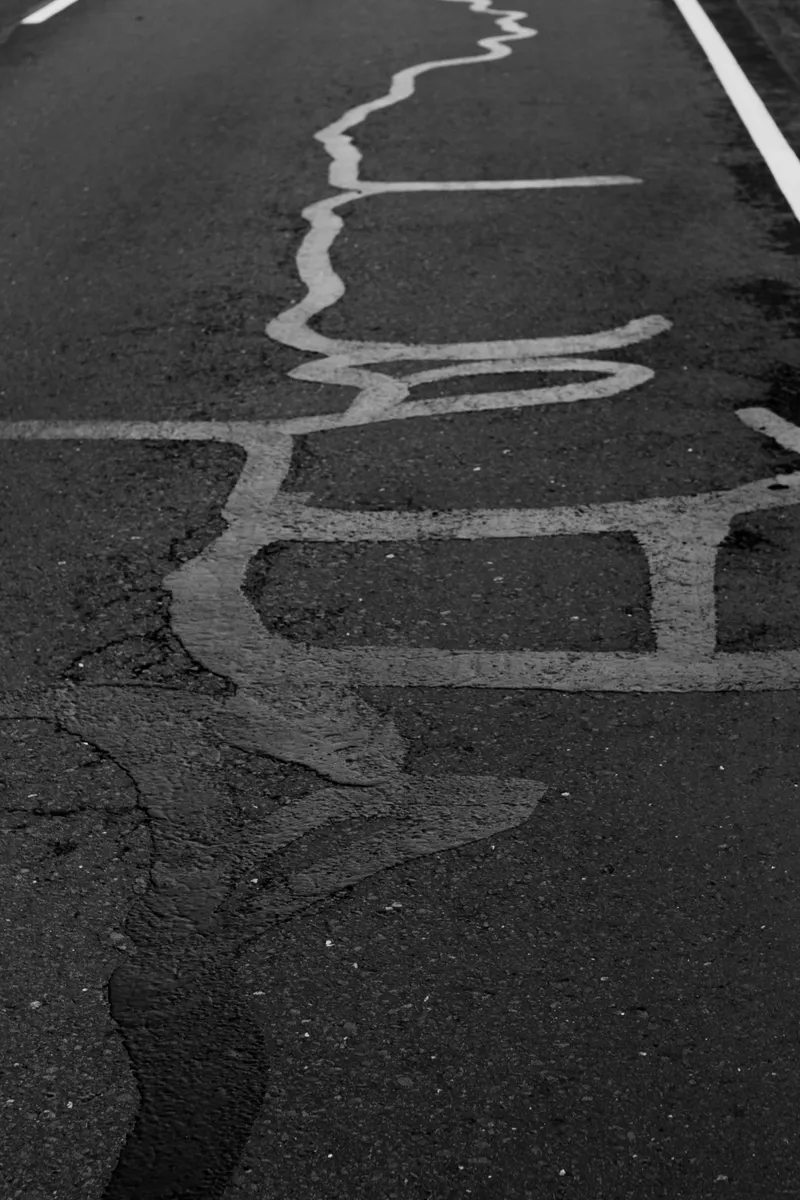
Clay-Heave Crack Repair for Haltom City's Black Gumbo Soil
Haltom City sits on the same high-plasticity 'black gumbo' clay running through Tarrant County's Eagle Ford and Woodbine formations, with clay content here routinely exceeding 50% — among the most expansive soil in the country. That clay swells during wet stretches and shrinks hard through the long summer dry season, moving several inches under a driveway or lot and heaving straight-line cracks through pavement that was compacted and finished correctly on day one.
That's a soil-movement problem, not a workmanship problem, and it needs a different fix than a patch: proper base depth and compaction that gives pavement a fighting chance against subgrade movement, plus routine crack sealing to keep water from reaching the reactive clay underneath.
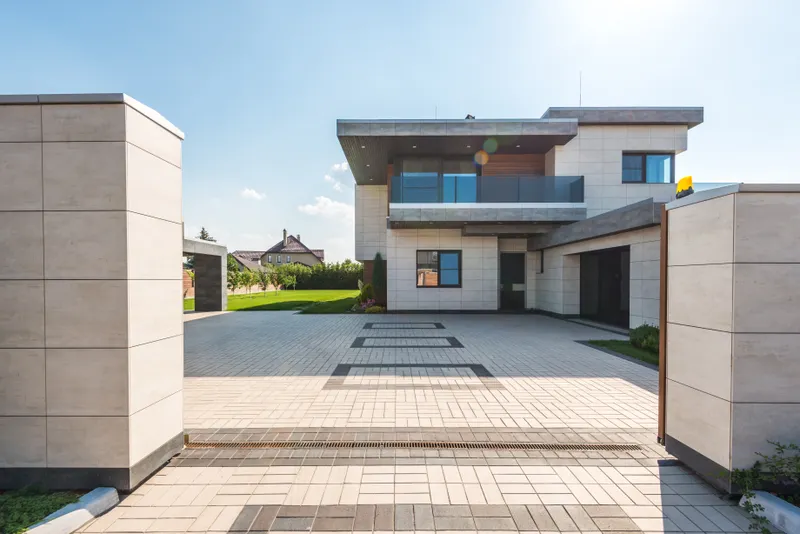
Sun-Oxidized Driveway Resurfacing in Haltom City
Texas summer surface temperatures on dark asphalt run well past ambient air temperature, and years of that heat and UV exposure oxidize and embrittle the asphalt binder holding a driveway's surface together — the graying, brittle look common on older Haltom City driveways well before the base itself fails. Once binder oxidation sets in, the surface sheds aggregate and cracks under normal thermal expansion, even on a driveway with a sound subgrade.
A thin overlay or full resurfacing restores a fresh wear surface without the cost of tearing out a driveway that still has a good base. We check the subgrade first, because resurfacing over a base already failing from clay movement just buys a shorter fix.
Local Service
Commercial Lot Paving Along Belknap & Beach Street
Haltom City's Belknap Street and Beach Street corridors carry heavy retail and light-industrial traffic, and that traffic ages parking-lot asphalt on a different timeline than a residential driveway.

Parking Lot Paving & Resurfacing on Belknap and Beach Street
Belknap Street (SH-183) and Beach Street form the spine of Haltom City's commercial and light-industrial corridor, and the retail centers, warehouses and service businesses lining them generate steady daily traffic that rutting and potholing thrive on. A lot built decades ago for a lighter traffic load shows wheel-path rutting and alligator cracking well before its structural life is up, especially with the same expansive clay subgrade underneath it that heaves residential driveways citywide.
We evaluate whether a Belknap or Beach Street lot needs full-depth repair, a mill-and-overlay, or new paving over a rebuilt base, sized to the property's actual traffic pattern.

Haltom City Building-Permit Coordination for Paving Jobs
Driveway and paving work inside Haltom City's corporate limits runs through the City of Haltom City's building department, not through Tarrant County directly — a distinction that matters for a property sitting in one of the unincorporated pockets nearby, which fall under county jurisdiction instead. Commercial lot work along Belknap and Beach Street typically carries more documentation — drainage, ADA striping counts, fire-lane markings — than a straightforward driveway repour.
The crews we coordinate with handle the permit application and inspection scheduling as part of the job, so a Haltom City owner isn't the one tracking down which office to call.
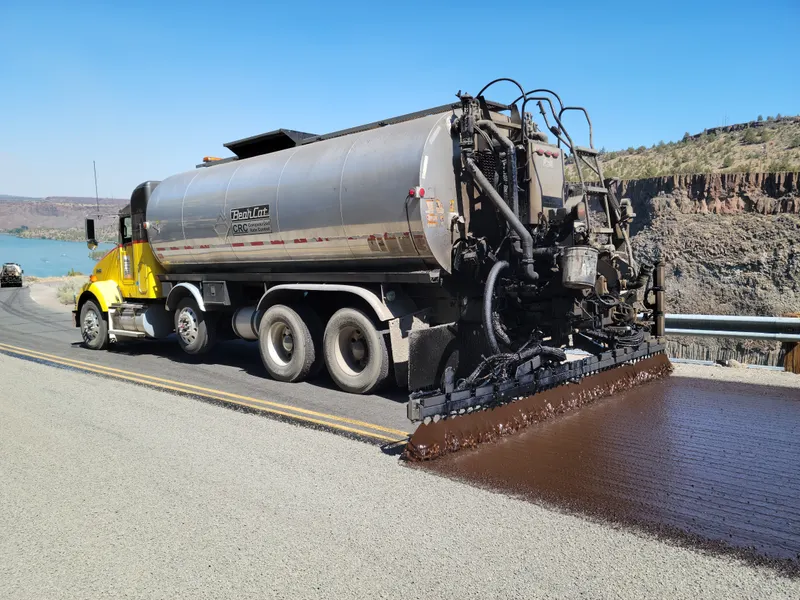
Commercial Sealcoating for Belknap & Beach Street Traffic
Preventive maintenance done at the right time is more than six times as cost-effective as letting pavement fail into full rehabilitation — Michigan DOT documented reaching its target network condition for about $80 million in preventive work versus an estimated $700 million to rebuild from failure. That math holds for a Belknap Street strip-center lot as much as a highway: sealcoating on the right cycle protects the binder from UV oxidation and keeps water out of the clay subgrade underneath.
Commercial lots on the corridor's heaviest-traffic blocks generally need sealcoating more often than a residential driveway a few streets over, and we schedule around a business's operating hours.
Local Service
Fast Response From a Crew That's Already in Haltom City
Home-Base Dispatch Inside Haltom City's 12.38 Square Miles
Our address sits on Huddleston St inside Haltom City's 76137 ZIP, so a Haltom City call isn't a dispatch decision — it's the shortest drive on the route. At just 12.38 square miles, the city is compact enough that we've worked most of its neighborhoods more than once, from older postwar streets near downtown to newer infill near Loop 820.
That proximity means faster on-site evaluation and a quote that isn't padded for drive time, whether the job is a cracked driveway or a full lot resurfacing on Beach Street.
Coverage Bounded by Loop 820, Denton Highway and SH-183
Haltom City is bounded by NE Loop 820, US-377 (Denton Highway), SH-121 and SH-183 (Belknap Street) — a tight highway frame that also defines how fast we move a crew between jobs. We cover both ZIPs touching Haltom City, 76117 and 76137, and any address inside those boundaries gets the same fixed-price quoting and scheduling priority.
Properties in the unincorporated Tarrant County pockets just outside those boundaries are covered too — we confirm which permitting authority applies before the crew starts.
Serving Haltom City and North Richland Hills Together
Haltom City and [North Richland Hills](/north-richland-hills-tx) sit on the same Loop 820 corridor northeast of Fort Worth, and a crew finishing a Haltom City driveway is often minutes from an NRH job the same day. Both suburbs sit on the same expansive black-gumbo clay belt, so the driveway heaving and lot rutting here shows up on the same seasonal cycle a few miles up the highway.
That overlap means a Haltom City owner isn't waiting on a dedicated trip — the coordinated crews already work this stretch of North Tarrant County daily.
Haltom City is our home base — every job here starts from the same address on Huddleston St, whether it's a cracked driveway a few streets over or a resurfacing job on the Belknap Street corridor. The full Asphalt & Paving North Fort Worth service area radiates out from this city, and the same coordinated crews cover North Richland Hills along the same stretch of Loop 820.
Haltom City's expansive clay subgrade means we spend as much time on asphalt repair and sealcoating here as anywhere on our route, alongside asphalt paving for driveways that have finally outlived their original 1950s-70s base and asphalt resurfacing for pavement that just needs a fresh wear surface. Call (817) 207-5968 any time — we're Open 24 Hours and dispatch already knows this city block by block.
Service Area
Serving Haltom City & Nearby
Frequently Asked Questions
How much does asphalt paving cost in Haltom City?
New asphalt paving typically runs $3 to $15 per square foot installed, and a full residential driveway usually lands between $3,000 and $10,000 depending on size, base condition and access. A commercial lot along Belknap or Beach Street scales up fast, running roughly $10,000 to $150,000 for a small-to-mid-size lot. Haltom City's expansive clay subgrade sometimes pushes cost higher than a flat estimate suggests, since a lot on reactive soil needs deeper base prep to avoid heaving again within a few seasons. We give a written estimate after an on-site subgrade evaluation, not a phone-quote guess.
Why do so many Haltom City driveways crack on a predictable schedule?
Haltom City sits on high-plasticity 'black gumbo' clay weathered from the Cretaceous Eagle Ford and Woodbine formations, with clay content in Tarrant County frequently exceeding 50% — among the most expansive soil anywhere in the country. That clay swells during wet stretches and shrinks hard through the long, dry Texas summer, moving several inches under anything paved on top of it and heaving cracks through even correctly installed pavement. Add postwar 1950s-70s driveways that are simply old, and Haltom City sees this failure earlier and more consistently than newer suburbs. Proper base depth and drainage grading reduce, but don't eliminate, the seasonal movement.
Do I need a permit to pave a driveway in Haltom City?
Yes — driveway and paving work inside Haltom City's corporate limits requires a permit through the City of Haltom City's building department, covering approach width, drainage and right-of-way encroachment. Properties in the unincorporated Tarrant County pockets bordering the city fall under county jurisdiction instead, which changes who signs off on the work. We confirm the correct issuing authority for your address before the crew starts and coordinate the permit application and inspection as part of the job, so you're not tracking down which office handles it.
How long before I can drive on new asphalt in Haltom City?
New asphalt generally needs 3 to 7 days of cure time before regular vehicle traffic, longer if placed when temperatures are below 50°F, which slows the cure meaningfully. Light foot traffic is usually fine within 24 to 72 hours. In Haltom City, we time paving jobs around North Texas's temperature window — asphalt compacts and cures best in moderate weather, and placing it during peak summer heat or a winter cold snap can affect final density. We'll give a specific timeline based on the day's actual conditions, since Texas weather swings enough to matter.
How often should a Haltom City driveway or lot be sealcoated?
Sealcoating protects the asphalt binder from the UV oxidation and clay-driven cracking that's especially aggressive in Haltom City, and preventive maintenance on schedule is documented as more than six times as cost-effective as letting pavement fail into full rehabilitation. A driveway sealcoat typically runs $0.15 to $0.30 per square foot and takes 2 to 4 hours, while a commercial lot on Belknap or Beach Street runs $0.15 to $0.50 per square foot depending on traffic and coating type. New asphalt needs to cure first — roughly 30 days for a lot and up to 90 for a driveway — before the first sealcoat goes down.
What's the difference between resurfacing and full driveway replacement?
Resurfacing — a thin overlay or mill-and-overlay — adds a fresh wear layer over an existing base that's still structurally sound, running $1.50 to $4.50 per square foot, far less than a full tear-out. Full-depth removal and replacement, running roughly $4 to $8 per square foot, is the right call when the base itself has failed, usually from years of clay-driven heaving cracking through to the subgrade. In Haltom City, where reactive clay subgrade is often the root cause, we check base condition before recommending either — resurfacing over a genuinely failing base only buys a short-term fix.
Can you pave new asphalt over an existing driveway or parking lot?
In many cases, yes — an overlay places new asphalt directly over sound existing pavement, typically faster and less expensive than demolition and full replacement. It only works when the existing surface and base are structurally sound, though; paving over cracking driven by Haltom City's expansive clay subgrade without addressing the base first just telegraphs the same cracks through the new surface within a season. We evaluate the existing pavement and subgrade on site before recommending an overlay versus a mill-and-overlay, which removes the top layer first for a more durable result on a marginal base.
What causes potholes and cracking in Haltom City parking lots?
Alligator cracking, rutting and eventual potholes generally start with water working through surface cracks into the base, a process Haltom City's expansive black-gumbo clay accelerates because the subgrade is already moving seasonally underneath the pavement. Heavy, repeated traffic on the Belknap and Beach Street corridors adds mechanical stress on top of that soil movement, which is why lots there show wheel-path rutting and edge cracking earlier than a quieter residential street. Preventive crack sealing and sealcoating on schedule keep water out of the subgrade and are meaningfully cheaper than full-depth pothole repair later.
What time of year is best for asphalt paving in Haltom City?
Asphalt compacts and cures best in moderate temperatures, generally above 50°F, so North Texas's spring and fall windows are typically ideal for paving here. Summer paving is workable but requires careful timing around peak heat, since surface and ambient temperatures both affect how the mix compacts. Winter paving is possible on warmer Texas days, but placement below 50°F extends cure time and can affect final density if not managed carefully. We schedule around the specific week's forecast rather than a fixed calendar rule, since North Texas weather varies enough to matter.
Should I choose asphalt or concrete for a Haltom City driveway?
Asphalt is generally the lower upfront-cost option and easier to patch locally when Haltom City's expansive clay subgrade causes movement-related cracking — you can address a cracked section without redoing an entire slab the way concrete often requires. Concrete tends to hold up longer against Texas summer heat without the softening asphalt binder can experience, but it's more expensive to install and harder to repair invisibly once it cracks on the same reactive clay. Given how aggressively the black-gumbo clay under Haltom City moves seasonally, we walk each property through both options against its specific subgrade and budget.

Get a Fixed-Price Paving Quote for Your Haltom City Property
Our home base — the fastest dispatch on the whole route, Open 24 Hours.
Call (817) 207-5968